Though a straight line appears to be the shortest distance between 2 points, life has a way of confounding geography. Often it is the dalliances and the detours that define us. There are no maps to guide our most important searches; we must rely on hope, chance, intuition and a willingness to be surprised.

Saturday, December 16, 2006

With a Tear in My Eye…

Being a ‘glass-half-full’ kinda guy, I’m loathe to make this anything other than a cheery farewell to Belize. But leaving was hard! As a guy who watches It’s a Wonderful Life at this time of year (every year) and always ends up sobbing (poor little Zuzu’s petals!!), I have to say it was… emotional.

On the other hand, I’d like to look at it this way: the reason it was so difficult to leave is because everything has worked out so well for me here. I’ve been very fortunate. In particular, the project has been really rewarding for me (and should hopefully be of great value to BCVI), discovering Belize has been a joy, and I’ve made some great friends.

The Project has gone really well


“Do I really have to read this thing? It’s painful just picking it up.” I hand over my 22,000-word report to BCVI Director, Mrs Joan Musa.

Between June and August of this year, I walked 500 miles around Scotland (and London), raising over £3,000 of funding towards a Challenges WorldWide organised project with the Belize Council for the Visually Impaired. Now that the project is completed, what did all that fundraising achieve? Was it worth it?

When I arrived on the 7th of September my goal was to “develop a financial plan incorporating forecasts and financial planning advice to ensure financial sustainability for BCVI.”

Over the following three months, I carried out research into the eye-care sector in Belize, interviewed BCVI staff, and developed a financial model based on BCVI’s accounting system. The key outputs were (1) a 65-page report setting out all my findings, providing financial forecasts for BCVI to 2010 and setting out 9 key recommendations to help ensure future financial sustainability and; (2) a spreadsheet-based model, which BCVI staff will be able to use in future to carry out their own financial modelling.

The feedback I’ve had so far has been very positive – in the short term, BCVI’s director plans to share the report with BCVI’s key funders in advance of discussions about BCVI’s future funding. In the longer term, I hope some of the recommendations I’ve made will be adopted and will help strengthen BCVI’s finances. This will help BCVI extend their lifeline services to an even greater share of Belize’s poor population.

LEFT: Dana, Vic, Joan Samuels, Lisa, Joan Musa and Kaiser Sose

RIGHT: Dana takes Christa’s place behind the camera. Hi to Naomi and Mark who weren’t in on my last day.

Hope this reassures everyone who made a donation that the money was well spent, especially those of you who were beginning to suspect that your donations had gone into a slush fund to finance deep-sea diving, rampant consumption of rum/belikin, and the bribing of border guards.


What it’s all about. BCVI and CARE at work

Travelling in Belize has been superb

And I managed to get to Mexico, Guatemala and Honduras as well.

Mexico

Guatemala
Honduras…

…And Belize


And lastly (new) Friends and Family

It was a real stroke of luck to stay with Evan and Mari. They fed me, entertained me and looked after me, and put up with my dodgy Spanish for three months - above and beyond the call of duty. I am extremely grateful.


I’ve made some great friends here. Hope it all goes well for Karin back in Sweden, Kirsty - who’s done a great job cataloguing the history of the Red Cross here and has made a superb documentary about it – and Dorothy, who’ll be here for almost another two years with Peace Corps.

And I will especially miss my long-suffering (at least as long as I was driving) travelling companion Teri.

Maybe the 3 months have passed pretty quickly, but it honestly feels more like I’ve been here for a year. I’ve really enjoyed life in Belize – if I win the lottery I’m coming back to do this permanently. But for now I have to move on.

Next stop deepest, darkest Peru. I’ll be out of email contact whilst in the mountains so I just want to say have a fab Christmas and New Year. Please keep in touch and I’ll be back online soon.

Merry Xmas from Teri and I to one and all.


Sun sets on Belize

Son of a Gun Gonna Have Big fun, erm… in Cayo

A brief break in the rain at Cahal Pech

For my last trip in Belize I went back to Belize’s adventure capital San Ignacio (aka Cayo). Planned to relax (and catch up on sleep) after the hectic last week when I’d been working all hours to finish the project and the report.


These lizards in Cayo are recovering well from near extinction, now that hunting and eating them are outlawed. They can be well over 6 feet long, tail included.

The last week has been the wettest of the year in Belize. The rainy season is supposed to be over, but the flooding in San Ignacio suggests otherwise. This footbridge is a key link between local villages and San Ignacio itself. It is usually well clear of the water.


The main road into San Ignacio is a few feet under the flood waters here. Fortunately, one other bridge links San Ignacio with the rest of Belize. And even on Thursday morning that was high above the flood waters.


Most of Cayo’s adventure trips were washed out by the weather. I was quite happy to just chill out instead. Still managed to squeeze in one more Mayan site – the oldest inhabited site in Belize, Cahal Pech.


Cahal Pech

Monday, December 11, 2006

Honduras

Beautiful water, jungle and mountains of Honduras

What to say about the Honduras trip?! It was part-joy and part-trial! It’s only fair to mention the positives first as the negatives were pretty much bad luck and misfortune. It’s a beautiful country for starters. Teri and I caught the boat from Punta Gorda in the South of Belize and almost immediately you can see the mountains of Guatemala and Honduras looming up through the heat-haze. As the barrier-reef extends right down to the Honduranian coastline, the waters are bright, and flat like a mirror.


Leaving PG


The boat took an hour to Guatemala from where we took a cab another hour to the border with Honduras. After much passport stamping and fee-paying we were on the bus - two gringos loose in the wilds of Spanish-speaking Central America.


"One man went to Omoa..."

Omoa (above) was the first place we stayed. The coastal village has a long history, which must have been transformed when the Spanish arrived, and built a huge fort here in the 15th Century.


Cannons… n ...balls.

From Omoa, we had a couple of long bus rides from Omoa in the North West through to La Ceiba the North East of Honduras. The countryside was all jungle and misty mountainsides. A little into the interior, we had to change buses in San Pedro Sula, the largest city in Honduras, which seems to have a bit of a reputation as a kind-of Bogota of Central America.


From La Ceiba, we caught the ferry to Roatan. Roatan is quiet, beautiful and laid back but compared to the mainland it seemed touristy. Up to that point, we had seen 6 other gringos in two days in Honduras.

And the bad parts? There was obviously something in the air when my 5-hour bus ride from Belize City to Punta Gorda pulled up 20 minutes out of BC with a puncture. I had an ominous feeling after that, and when the bus pulled up again two hours later behind a long queue of traffic, in the dark, in the middle of the hills and jungle I knew there were trouble at mill.

This is the wreck of a fruit-truck that, on Thursday morning, had been heading from Southern Belize to the capital when at about 2.30 in the afternoon it skidded, jacknived and blocked the entire road. When we arrived at 6.30, this was pretty much the scene: a score of blokes throwing grapefruit everywhere. There was nowhere for traffic to pass, but luckily bus drivers on opposite sides of the crash had the great idea of swapping passengers and then turning back (there is only one road from the capital to the very south of the country) to where they started, so I still got to PG that night, about 8 hours after setting out…


It’s always best to make the most out of adversity. I nabbed a grapefruit and smuggled it through Guatemala and into Honduras where Teri and I had it for breakfast on Friday morning.


Fledgling airline Air Honduras suddenly realises the impracticality of spending its entire aircraft budget on glamorous air-hostesses…

All in all, it took about 8 hours by coach, then an hour by boat, an hour in a cab, two plus one plus four hours in another 3 buses and then an hour by catamaran to get to Roatan. Faced with this return trip and dicky tummies, we opted for the luxury of flying back to Belize. In comparison with buses and boats, even three flights in a tiny plane with a two hour delay in the middle was little to gripe about, though we were a bit miffed when we were moved from the back of the plane to the front, to help ‘balance things up’. Best not to argue with pilots or aircraft mechanics though, I find.

All that was nothing though, compared to the big trauma of the weekend – food poisoning! I don't know whether it was the food or the water, but i was on my back (or more often in the loo) for the whole of Saturday and didn't eat anything for 36 hours (very, very unlike me). Teri was then sick too, just as i was getting better. Our big plans for jungle walks and exploring had to be ditched, but at least where we were staying had a beautiful beach to flake out on.

"Teri, I think there's only one solution for my problem...", "Don't worry Calum, I've found it already..." The Honduranian over-the-counter remedy for the runs.

In that last day I somehow also managed to lose my bankcard (machine at the airport ate it) and my sunglasses (don’t even know where I lost those). I just can’t cope with a 4am start… It was almost a relief to get back to the relative safety of Belize City, where there had been just four shootings since I'd left the previous Thursday.


Tuesday, November 28, 2006

Checkin’ Tikal Mas Alta


Aw man… worst pun ever. Apologies. It came to me when I went for a curry at Serendip restaurant in San Ignacio on Saturday night (oh, great curry by the way). For those not bilingual (me included) – Mas Alta is Spanish for higher, and Tikal is indeed the highest, largest, most impressive site in the Mayan World (mas o menos). Sven, I hope you appreciate how committed I am to improving our linguistics.

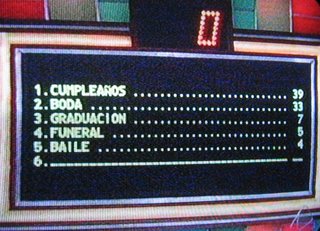
Talking of which, my new favourite programme on Mexican tv is “Que dice la gente”, or ‘What do the People Say?’ - the Mexican equivalent of Family Fortunes. Apart from the advert for “Mucho Busto”, there is nothing more entertaining on tv.


Si es esta en la table, voy a darle el dinero personalemente!

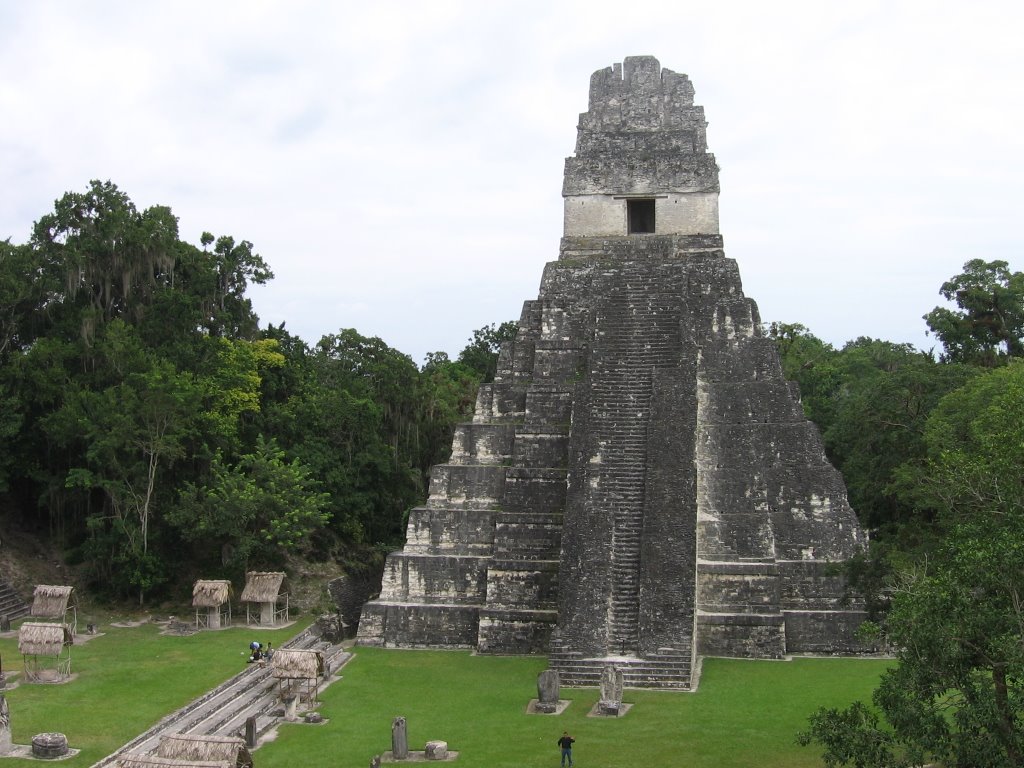
Tikal was exactly what it said on the tin – truly huge temples (up to 200ft high) set deep in the jungle. And it was great to see a bit of Guatemala: much poorer than Belize, and obsessed with horses and football from what I could see. Enough chat, here’s some photos:


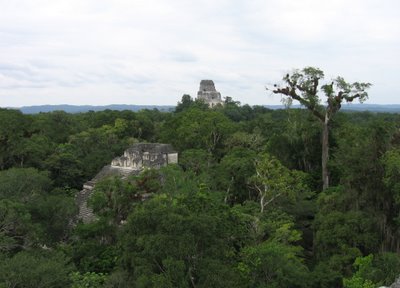
Temples break through the tree canopy. Only the Ceiba tree (on the right) is tall enough to compete with the Mayan constructions.

From the top of the temples you can see for over 20 miles across the Guatemalan jungle.


Restoration is - not surprisingly - a long standing task at Tikal. The Mundo Perdido (Lost World) temple at Tikal took a thousand years to construct, from 700BC to 300AD.

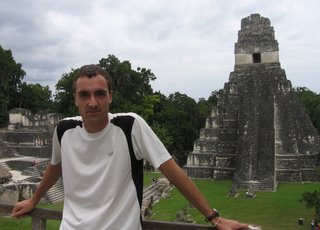
Smarmy tourist tarnishes ancient site…


On the Friday night I went to see the Nutcracker - Belizian style - at the national concert hall. Great fun, with some amazing outfits and a mix of classical, reggae and Punta-Rock numbers! Top tip - chucking a hundred kids into the cast guarantees a big audience of friends and family…
Actun Tunichil Muknal


Found my way to San Ignacio at the weekend. I’d heard a lot about this little town in the hills and it had just as much charm as I’d been promised. Plus I got my own room with a balcony to sit out on, for £7.

San Ignacio is the base for some of the most unusual and adventurous tours in Belize. I did two of them at the weekend.

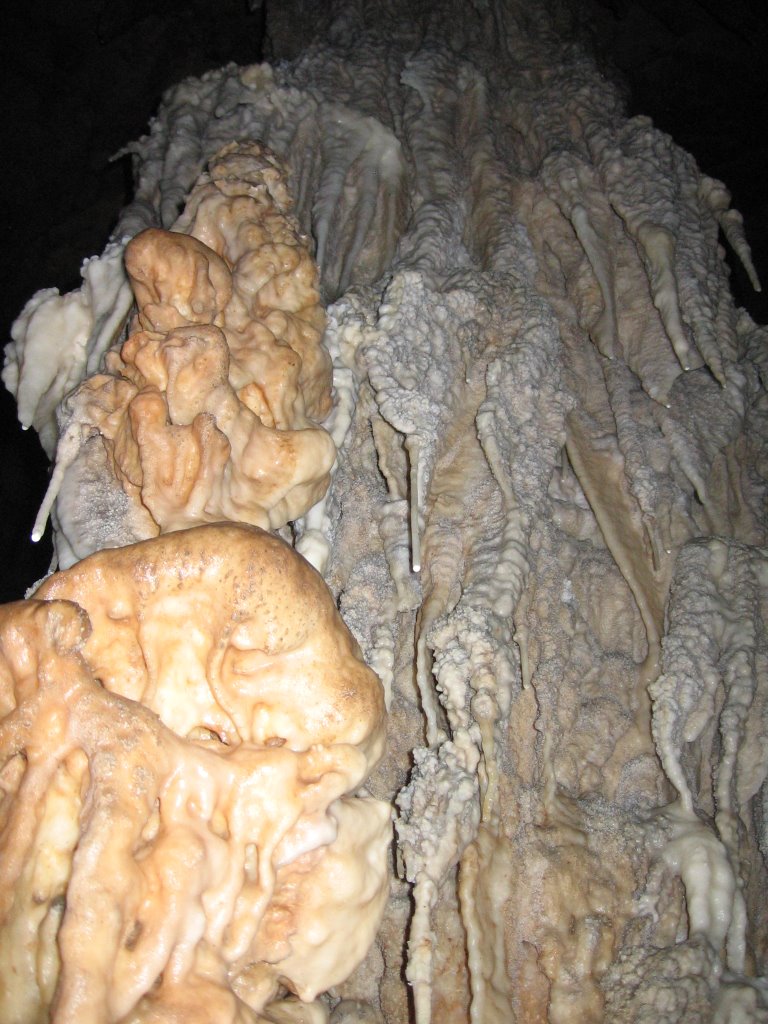
On Saturday I had an unforgettable trip into what can seriously and soberly be described as ‘another world’. Actun Tunichil Muknal is the Cave of the Stone Sepulcher, a sacred Mayan site described by our guide as one of the top 10 caves in the world. I’m not sure exactly who compares caves (and how?), but by any measure, this was an awe inspiring experience.

Going Underground. Nervous, me?

After a long trek through the rain-forest, the adventure proper starts with a plunge into a 20-foot-deep pool at the cave entrance. This is followed by almost a mile of squeezing through gaps, wading or swimming across underground pools, and scrambling up rock-piles and through giant caverns.


Filming for Alien V starts any day now.


It was hard to say what was most impressive – the adventure side of the experience; the size, beauty and atmosphere of the cave or; the impressiveness of the Mayan pottery and ancient remains. The whole thing is made even more unnerving by the sightless catfish swimming around in the water near your feet, while pure white millipedes and other unusual insects crawl across the walls and large bats flit overhead.

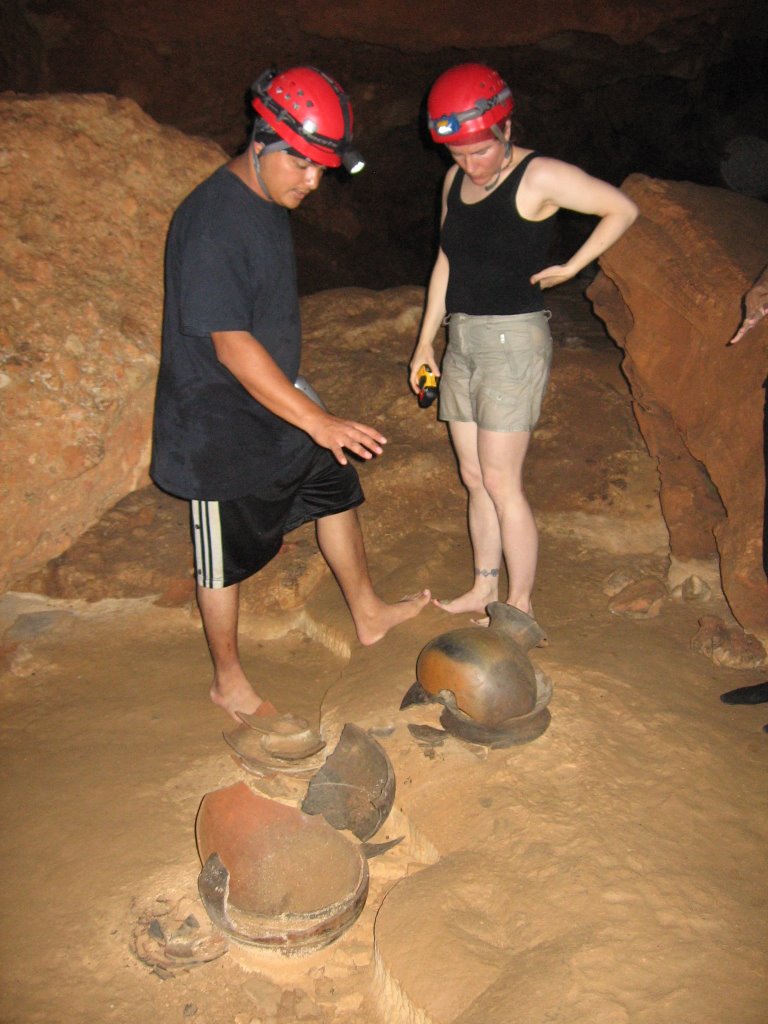
Our guide describes how the Mayans made beautiful pottery, just to be brought into the cave and ritually smashed, in sacrifice to the gods.

But what makes the cave world-famous is those human remains. I found it difficult to get my head round the fact that I was entering a tomb, untouched by humans for more than a thousand years. The cave was rediscovered in the 70s, explored by scientists in the 80s and opened to visitors about ten years ago. There are virtually no concessions to tourists, with just one small ladder at a particularly tough climb, and no other safety precautions.

Even more surprisingly, 95% of the original artefacts have been left lying in the cave as they have been for more than a thousand years. At several points the guide said things like, “watch you don’t stand on those pots just to your left there”!! Bizarre…


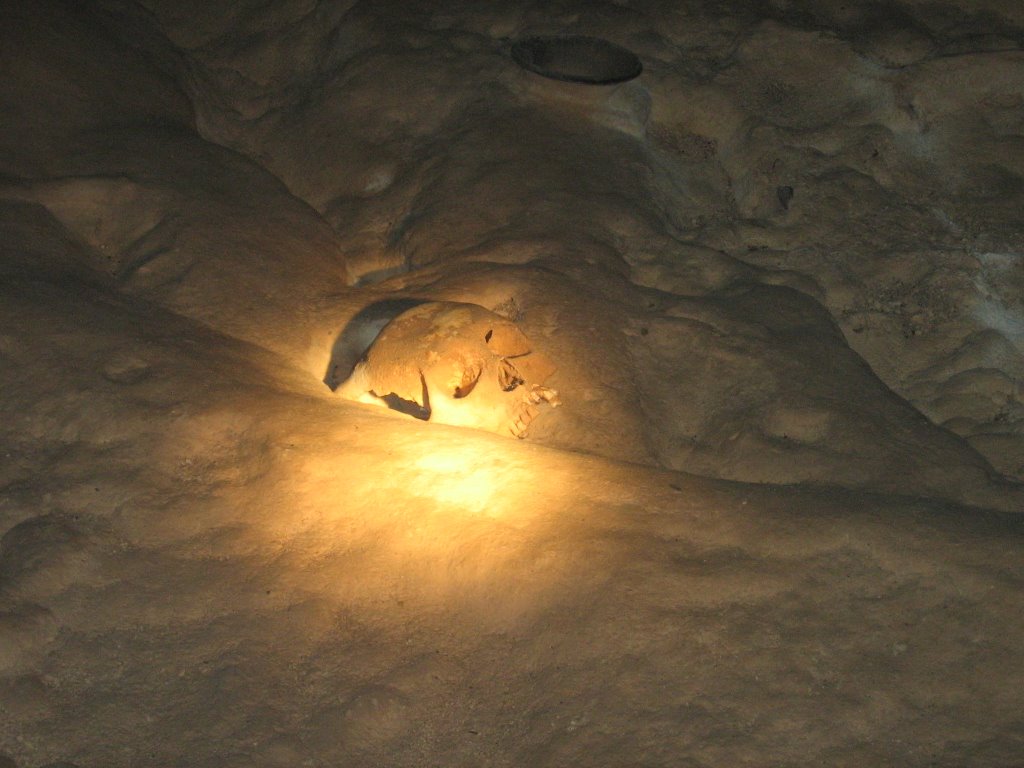
The skull of a teenager, sacrificed to the gods. The skull looks alien, because he Mayan practise was to encourage deformity in sacrificial victims. A board would have been strapped to the child’s forehead at a young age, causing the skull to grow deformed. The skull has become calcite-encrusted over hundreds of years.

…and hard to see the experience being sustainable as the cave becomes more famous and popular. Now that National Geographic have visited, it can only be a matter of time before things get roped off and protected by glass boxes.


But for the moment, it’s just a fantastic adventure, the climax of which comes in the deepest, darkest corner of the cave. After wading, swimming and climbing through a thousand feet of gullies and caverns the guide asks for all our headlamps to be turned off. After a few moments of utter darkness and silence, he shines a torch onto the remains of the Stone Sepulcher herself, the complete skeleton of a young woman, a princess in the Mayan world, who was sacrificed to the gods some 1,200 years ago.

Actun Tunichil Muknal, Cave of the Stone Sepulcher